
EXECUTIVE SUMMARY (TL;DR)
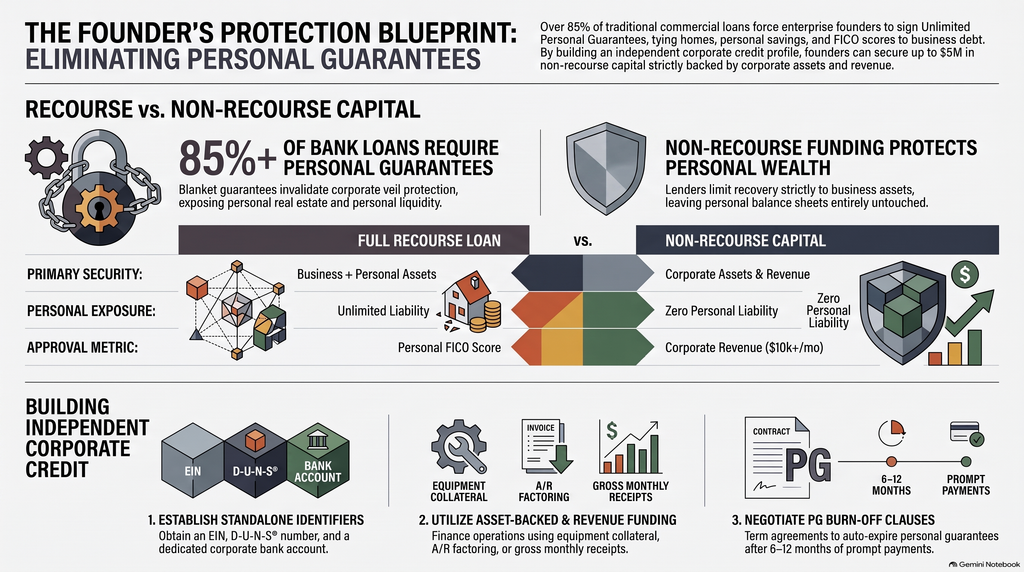
- The Recourse Trap: Over 85% of commercial loans require unlimited Personal Guarantees (PGs), tying personal assets, homes, and FICO scores to corporate debt liability.
- Separating Business Credit: Enterprise credit structuring requires establishing a standalone corporate profile using EIN-only lines, asset-backed debt, and A/R factoring to insulate personal balance sheets.
- Non-Recourse Funding Execution: High-revenue founders can leverage non-recourse capital options from $10,000 to $5 Million without putting personal real estate or personal liquidity on the line.
The Silent Hazard Facing High-Revenue Founders
When scaling an enterprise—whether purchasing heavy machinery, building out commercial real estate, or covering payroll during growth spikes—the default requirement from commercial banks is an Unlimited Personal Guarantee (PG).
For a founder generating millions in annual revenue, signing a blanket personal guarantee invalidates corporate veil protection. It transforms enterprise debt into personal liability, exposing personal real estate, liquid savings, and personal credit scores to operational risks, customer payment delays, and economic shifts.
To scale securely in 2026, founders must transition from personal FICO reliance to an independent corporate credit structure.
Recourse vs. Non-Recourse Capital Comparison
- Full Recourse (Standard Bank Loan)
- Primary Security: Business Assets + Personal Assets
- Personal Exposure: Unlimited (Home, Savings, Personal FICO)
- Underwriting Speed: 60 to 90 Days
- Primary Approval Metric: Personal Credit Score
- Non-Recourse / Limited Recourse
- Primary Security: Corporate Assets, Accounts Receivable, or Equipment
- Personal Exposure: Zero Personal Liability
- Underwriting Speed: 12 to 48 Hours
- Primary Approval Metric: Corporate Revenue & Asset Value
Key Terms Founders Must Understand:
- Full Recourse Debt: The lender can seize business assets and pursue the founder’s personal assets if a default occurs.
- Non-Recourse / Asset-Backed Debt: The lender’s recovery is strictly limited to the underlying asset financed (such as the equipment, fleet vehicles, or accounts receivable).
- Burn-Off Clauses: Structured agreements where a personal guarantee automatically expires (“burns off”) once the business achieves specific revenue or equity milestones.
4 Steps to Build an Independent Corporate Credit Profile
1. Establish Separate Entity Identifiers
Your business must exist as a standalone entity in the eyes of credit bureaus:
- Obtain a dedicated Employer Identification Number (EIN).
- Acquire a D-U-N-S® Number via Dun & Bradstreet.
- Maintain a dedicated commercial bank account under the exact legal entity name.
2. Build Trade Creditor References (Vendor Lines)
Establish net-30 or net-60 payment terms with trade vendors that actively report payment histories to commercial bureaus (Experian Commercial, Equifax Small Business, and D&B). Consistent early payments generate an 80+ PAYDEX score.
3. Leverage Asset-Backed & Revenue-Based Financing
Rather than seeking unsecured bank loans that demand personal guarantees, utilize capital structures secured strictly by corporate revenue or physical assets:
- Equipment Financing: The machinery or vehicle serves as the sole collateral.
- Accounts Receivable (A/R) Factoring: Capital is advanced against outstanding B2B invoices.
- Revenue-Based Working Capital: Funding is approved based on corporate monthly gross receipts ($10,000+ monthly revenue) without personal collateral requirements.
4. Negotiate PG Exceptions and Burn-Off Clauses
When dealing with non-bank capital providers, request limited-recourse terms or performance burn-offs. Once a business demonstrates 6 to 12 months of flawless payment history, lenders can release personal guarantees from credit lines.
Frequently Asked Questions
Q: Can a business get approved for significant capital without a Personal Guarantee? A: Yes. Non-bank lenders evaluate monthly corporate revenue, bank cash flows, and underlying business assets rather than personal credit scores. Solutions range from $10,000 to $5 Million with zero personal guarantee requirements.
Q: Does bad personal credit prevent my business from obtaining financing? A: Not under revenue-based or asset-backed structures. Underwriting focuses on business gross sales ($10,000+/month) and bank statement history rather than personal FICO scores.
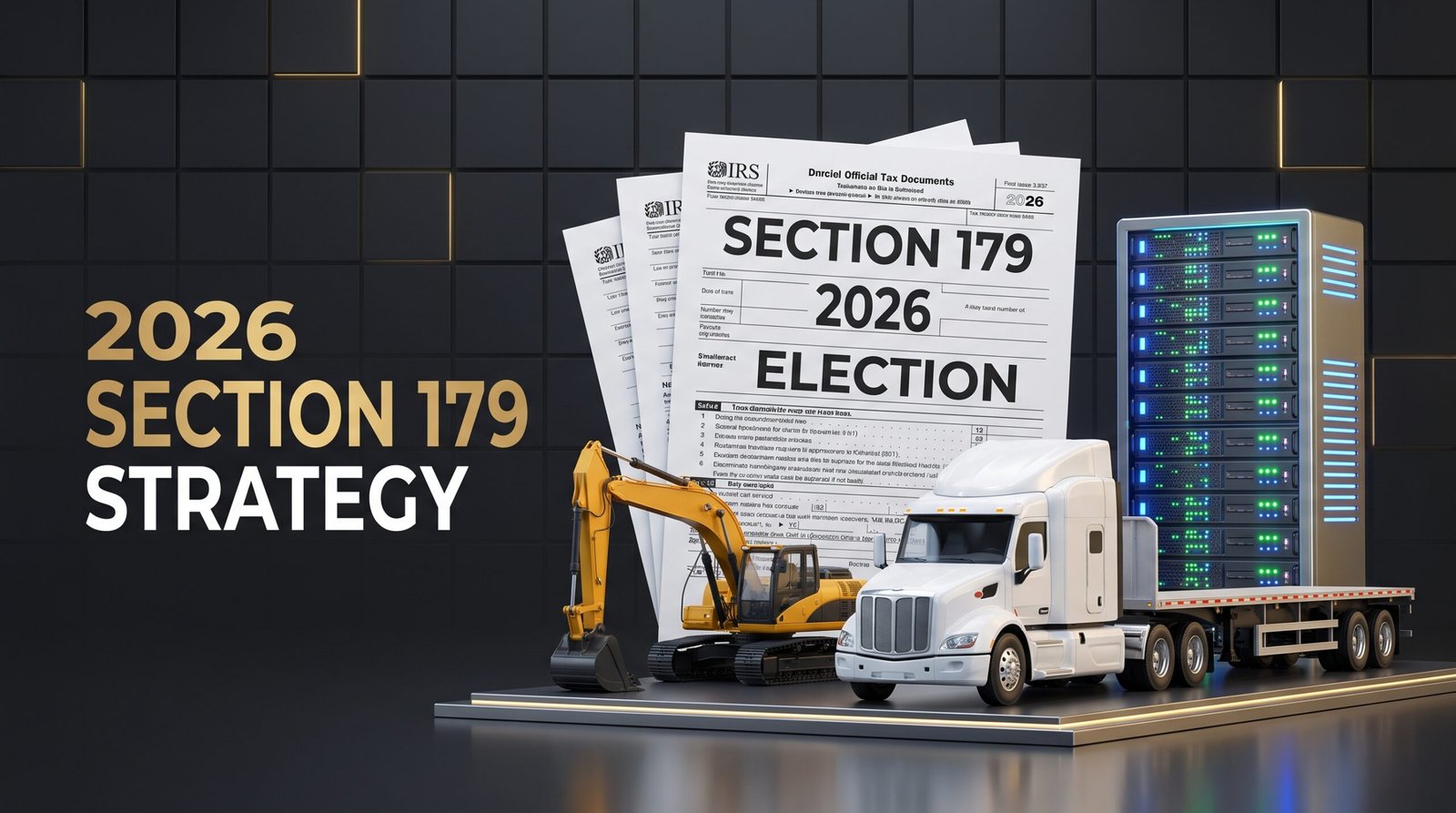
Q: How does personal guarantee protection impact Section 179 equipment purchases? A: By pairing Section 179 equipment acquisitions with express asset-backed financing, founders can claim full upfront tax write-offs on qualifying equipment while keeping the debt liability attached strictly to the business asset.
Secure Your Enterprise Capital Strategy
Protecting personal wealth while expanding corporate operations requires proactive credit structuring. At Kaizen Business Credit, our express non-bank capital engine provides funding decisions in 12–24 hours and capital access in 24–48 hours—allowing founders to scale without taking on unnecessary personal risk.
Explore zero-PG working capital lines and asset-backed options today at kaizenbusinesscredit.com.